Specification gate
Chemical name, CAS if known, ionic type, active content, pH, density, quantity and unit. If any of those are still “TBD,” the inquiry should say so instead of borrowing a catalog default.
DOCUMENT GUIDE
This creative page reuses a specification-split structure to walk buyers through SDS, TDS, CoA and approval questions before contacting surfactant distributors. It is not an ESG, carbon or circular-economy statement. The output is a go/no-go list for the RFQ, not a factory audit badge.
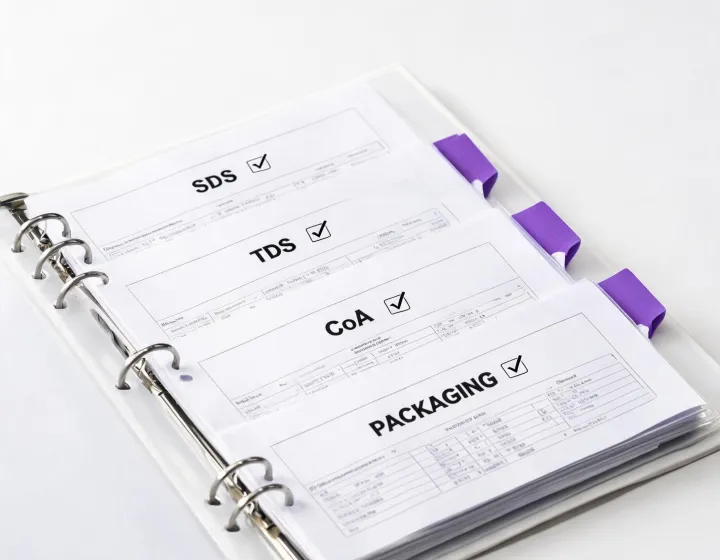
PRE-INQUIRY GATES
Chemical name, CAS if known, ionic type, active content, pH, density, quantity and unit. If any of those are still “TBD,” the inquiry should say so instead of borrowing a catalog default.
SDS, TDS, CoA format, and any TSCA, REACH, GMP or ISO evidence the destination requires. Each file is requested for the quoted product. A sister grade or another manufacturer’s sheet does not close the gate.
Package, labeling language, destination, requested timing, and any dock limit that forbids totes or forbids drums. Transport classification remains a supplier confirmation against the SDS and UN number.
Incoterm, currency, optional budget basis, and supplier preference stated as high-end, mid-range, budget or undecided. Preference is not a verified rating of surfactant distributors.
Public chemical-family references can help phrase questions. They cannot replace lot-level confirmation. If a supplier proposes a substitute active-content window, record it as a second line and wait for buyer approval before treating the quotes as comparable.
Limitations stay visible: unknown inventory, unpublished lead time, and no authority to instruct dilution, mixing ratios or foam testing. Those limits keep the document guide from being read as a capability brochure or a safety procedure.
Assay, purity, concentration, moisture and trace-metals columns should be requested only when the buyer already uses those tests. Certificate of analysis, safety data sheet and technical data sheet remain the three core files for every quoted surfactant, including distributor-relabeled packages.
OPEN QUESTIONS
Define what a sample must prove: identity, appearance, active content, pH, density, compatibility or packaging. Name the reviewer and the pass/fail rule outside the quotation. This site does not run the test method.
EHS and quality owners decide whether the SDS, transport class and destination rules allow receipt. We can request the files; we cannot certify the shipment or claim TSCA or REACH status for this website.
Procurement decides whether product, freight, duties and exclusions land inside the optional budget. No saving percentage is computed because this site has no locked price-comparison evidence.
Anionic, nonionic, cationic and amphoteric options can all be requested. The RFQ should keep hardness tolerance, foam paperwork and freeze notes as separate columns rather than collapsing them into a single “better system” label.
Attach the open items in the requirement field. Surfactant Suppliers Sourcing will review product, quantity, destination and sourcing requirements, then contact possible surfactant distributors.